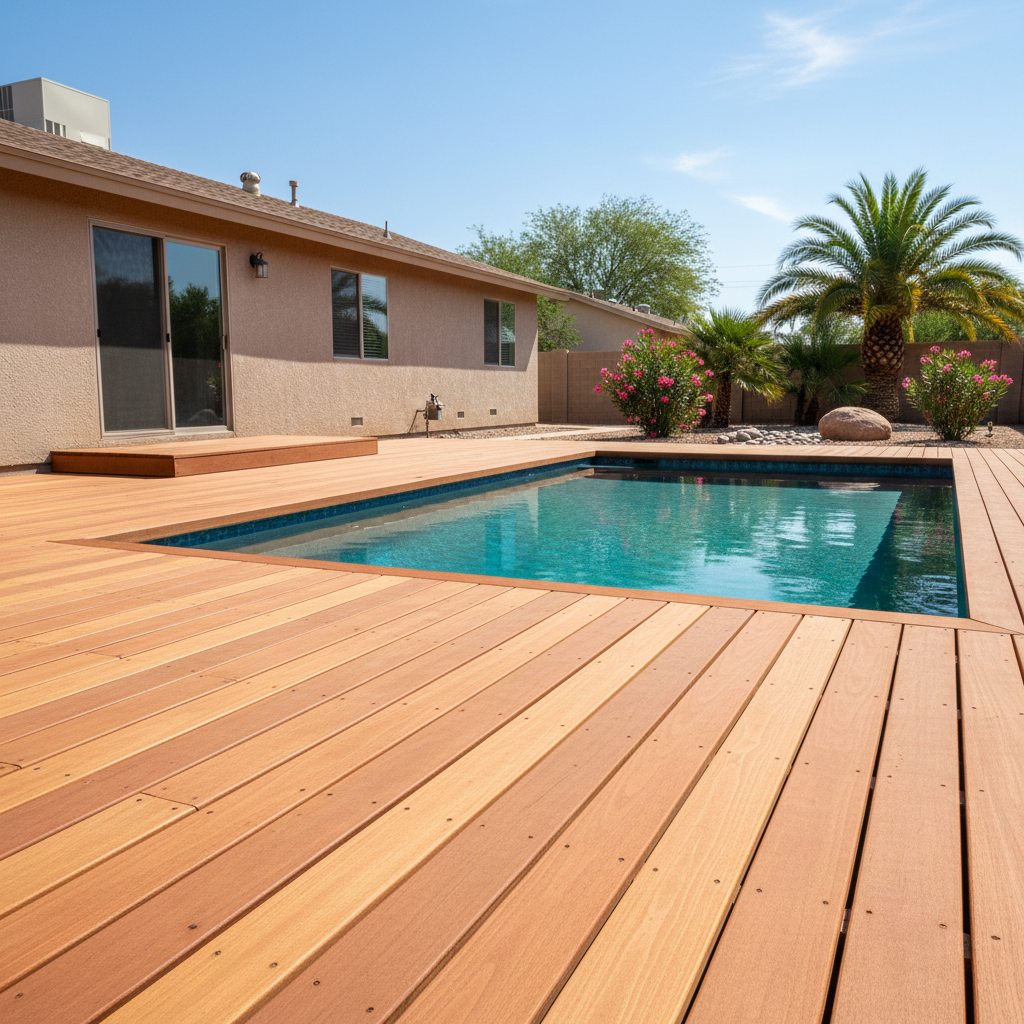
Alright, let's talk pool decks here in El Mirage. You've got that beautiful pool, especially during our long, hot summers, and you want a deck around it that's not just useful but looks good and lasts. But what's it actually going to cost you? That's the big question, and frankly, it's not as simple as a single number. I've built enough of these to tell you there are a lot of moving parts, a whole lot.
What Really Jacks Up (or Lowers) the Price?
When you're looking at pool deck costs, a few big things jump out. It's not just about square footage, though that's a huge part of it, obviously.
- Material Choice: This is probably the biggest factor. Are we talking about basic concrete pavers, stamped concrete, natural stone like travertine, or a composite decking material? Each has its own price point per square foot, and they vary wildly. Concrete is usually the most budget-friendly upfront, while natural stone or high-end composites will definitely cost more.
- Size and Shape: Obvious, right? A bigger deck means more material and more labor. But the shape matters too. A simple rectangle is quicker and easier to install than a complex, curving design that hugs every corner of your pool. More cuts, more custom work, more cost.
- Site Prep: This is often overlooked. If your yard needs a lot of grading, excavation, or if we hit a bunch of caliche (that hard, cemented soil we've got plenty of around here), that's going to add to the labor and equipment costs. Good drainage is critical around a pool, so sometimes we need to do extra work to make sure water runs away from your house and the pool's foundation.
- Features and Finishes: Are you adding built-in seating, planters, fire pits, or special lighting? What about a custom coping around the pool edge? These aren't just add-ons; they're integrated elements that require specific skills and materials, driving up the overall price.
- Accessibility: Can we easily get equipment and materials into your backyard? If we have to hand-carry everything through a narrow side gate, that's going to take longer and cost more than if we can back a bobcat right up to the work area.
Typical Cost Ranges in El Mirage
Okay, let's get down to some numbers. Keep in mind, these are general ranges for the El Mirage area and can fluctuate based on current material costs and labor availability.
- Basic Concrete Pavers or Broom-Finished Concrete: For a pretty straightforward, no-frills concrete deck, you're usually looking at anywhere from $8 to $15 per square foot. This includes the material, basic prep, and installation. It's durable, but it's not going to win any design awards without some upgrades.
- Stamped or Stained Concrete: If you want concrete but with a bit more flair, like a pattern resembling stone or brick, or a specific color, expect to pay $12 to $25 per square foot. The stamping and staining process adds labor and specialized materials, which makes sense.
- Composite Decking (e.g., Trex, Azek): For a composite deck that's elevated or built on a frame around your pool, you're generally looking at $30 to $60 per square foot. This includes the substructure, decking, and fasteners. It's low maintenance and looks great, but it's a bigger upfront investment.
- Natural Stone (Travertine, Flagstone): This is where things get pricier. For materials like travertine pavers, which are fantastic for pool decks because they stay cooler underfoot, you're often in the $25 to $50+ per square foot range. That includes the stone, base prep, and installation. It's beautiful and premium, but it's a significant investment.
So, for an average 500 sq ft pool deck, you could be looking at anywhere from $4,000 for basic concrete up to $25,000 or more for a high-end natural stone or composite deck with custom features. It's a big spread, I know, but that's why understanding the factors is key.
What Should a Good Quote Include?
When you get a quote from us at El Mirage Deck Builders, or anyone else, make sure it's clear and detailed. You don't want surprises, do you?
- Detailed Material Breakdown: Exactly what type of concrete, pavers, or decking material? What grade?
- Scope of Work: What's being removed? What's being installed? How much excavation or grading?
- Site Preparation: Specifics on grading, base material (e.g., compacted aggregate depth), and any necessary drainage solutions.
- Labor Costs: Sometimes broken out, sometimes included in the per-square-foot price. Just make sure it's clear.
- Permits: Who's responsible for pulling them? (Usually, it's the contractor, but confirm.)
- Warranty: What's covered, and for how long?
- Timeline: A realistic start and completion date.
How to Avoid Overpaying
Nobody wants to get ripped off, especially on a big project like a pool deck. Here's my advice:
- Get Multiple Bids: Don't just go with the first guy. Get at least three detailed quotes. This helps you compare apples to apples and understand the market rate.
- Check References and Licenses: Always, always, always. A good contractor will have plenty of happy customers and be properly licensed and insured.
- Be Specific About What You Want: The more detailed you are with your vision, the more accurate the quote will be. Changes mid-project almost always cost more.
- Understand the Materials: Do your homework. Know the pros and cons of concrete, pavers, composite, etc., for our El Mirage climate. Some materials hold up better to the sun and heat, and some require more maintenance.
- Don't Automatically Go for the Lowest Bid: A super low bid can be a red flag. It might mean they're cutting corners, using cheap materials, or aren't properly insured. You get what you pay for, especially with something that needs to last in our desert environment.
Building a new pool deck is a significant investment, but when it's done right, it really transforms your backyard and adds value to your home. Take your time, ask questions, and make sure you're comfortable with your contractor. That's how you get a deck you'll love for years.